

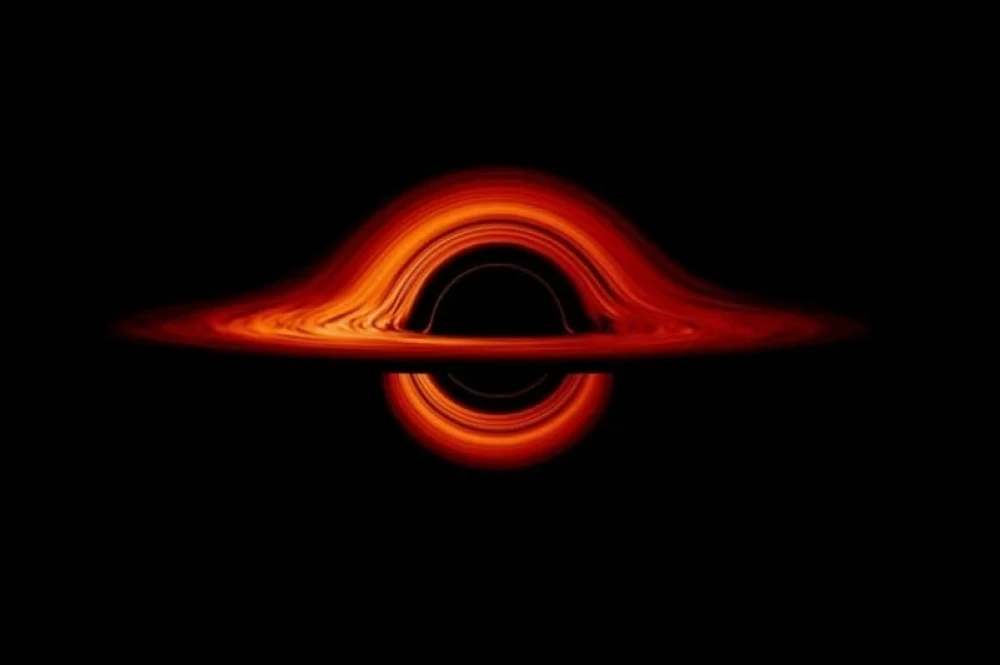
في أعماق الكون السحيق، وعلى بعد 10 مليارات سنة ضوئية، أضاء وميض غامض ظلمة الفضاء كما لو أن نجماً وُلد من رحم العدم. لم يكن نجماً ولا شهاباً عابراً، بل كان صرخة ضوء صدرت من قلب ثقب أسود جائع في مجرة بعيدة تُعرف باسم J2245+3743، التقطتها أعين مرصد «تسلازكوي» المتربصة بأسرار السماء، بعد أن تمكن فريق دولي من علماء الفلك من رصد أكبر وميض تم تسجيله على الإطلاق حول ثقب أسود، وهو أيضاً الأبعد من نوعه حتى الآن.
كتلته 500 مليون ضعف الشمس
وفي حين تغذّي هذه الثقوب السوداء العملاقة نفسها بالغاز والغبار المحيط بها عبر قرص تراكم، فإن هذا الوميض نتج عن اقتراب نجم ضخم جداً للغاية من الثقب الأسود الذي تبلغ كتلته 500 مليون ضعف كتلة الشمس، وقوة الجاذبية الهائلة للثقب الأسود مزقت النجم، وبدأت بقاياه تُبتلع في حدث يعرف باسم الاضطراب المدّي النجمي.
وقال ماثيو غراهام من معهد كاليفورنيا للتقنية، قائد الفريق البحثي، إن هذا الحدث «مختلف عن أي مجرة نشطة سبق وأن رصدناها، ويظهر الوميض أن الجسم بعيد جداً ولامع للغاية».
وبدأ العلماء متابعة الوميض في عام 2018، وشاهدوا كيف زاد سطوعه 40 مرة خلال بضعة أشهر. وعند ذروته، كان الوميض أكثر سطوعاً 30 مرة من أي وميض سابق للثقوب السوداء، مطلقاً طاقة تعادل 10 تريليونات شمس.
الوميض يتلاشى تدريجياً
وأوضح سافيك فورد من جامعة مدينة نيويورك أن كمية الطاقة المنبعثة من هذا الوميض منذ بداية الملاحظات تعادل تحويل الشمس بأكملها إلى طاقة وفق معادلة آينشتاين الشهيرة.
ويستمر هذا الوميض في التلاشي تدريجياً، ما يدل على أن الثقب الأسود لا يزال يبتلع النجم الضخم، الذي يُقدر أن كتلته الأصلية كانت 30 ضعف كتلة الشمس، مقارنةً بحدث سابق معروف باسم «سكاري باربي»، الذي كان يبتلع نجوماً أقل كتلة.
ويشير العلماء إلى أن تأثير تمدد الزمن الكوني يساعدهم على متابعة هذا الحدث بوضوح، حيث إن الجاذبية الشديدة حول الثقوب السوداء تبطئ مرور الوقت بالقرب من الأفق الحدثي، ما يجعل الحدث يبدو وكأنه «يتحرك ببطء أمام أعيننا».
ليس انفجاراً نجمياً
ويعتبر هذا الاكتشاف ذا أهمية خاصة، إذ إن معظم أحداث الاضطراب المدّي النجمي المكتشفة حتى الآن لم تحدث حول ثقوب سوداء نشطة، ويعتقد العلماء أن النشاط الطبيعي للثقوب السوداء قد يخفي هذه الأحداث في معظم الحالات، لكن حجم الثقب الأسود في قلب المجرة النشطة «J2245+3743» جعل الوميض واضحاً بشكل استثنائي.
وأكد الباحثون بعد دراسة دقيقة أنه ليس انفجاراً نجمياً (سوبرنوفا)، وأن الوميض لم يكن موجهاً نحو الأرض فقط، ما يؤكد أنه أقوى وميض ثقب أسود تم رصده على الإطلاق، ويعكس ابتلاع نجم ضخم بطريقة نادرة جداً.
وأشار الفريق إلى أن مثل هذه الأحداث قد تحدث في أنحاء الكون بأكمله، وأن المراقبة المستمرة للسماء باستخدام أدوات مثل «أداة تسلازكوي» و«مرصد فيرا سي روبن» قد تكشف المزيد من هذه الظواهر النادرة والمذهلة. ونُشرت نتائج البحث في مجلة «نيتشر أسترونومي» الثلاثاء 4 نوفمبر.
In the depths of the vast universe, 10 billion light-years away, a mysterious flash illuminated the darkness of space as if a star was born from the womb of nothingness. It was neither a star nor a shooting star; rather, it was a cry of light emitted from the heart of a hungry black hole in a distant galaxy known as J2245+3743, captured by the eyes of the “Teslazkoy” observatory, which is vigilant for the secrets of the sky, after an international team of astronomers managed to observe the largest flash ever recorded around a black hole, which is also the farthest of its kind to date.
Its mass is 500 million times that of the Sun
While these giant black holes feed on the surrounding gas and dust through an accretion disk, this flash resulted from a very massive star coming too close to the black hole, which has a mass 500 million times that of the Sun. The immense gravitational force of the black hole tore the star apart, and its remnants began to be consumed in an event known as tidal disruption.
Matthew Graham from the California Institute of Technology, the leader of the research team, stated that this event “is different from any active galaxy we have ever observed, and the flash shows that the object is very distant and extremely bright.”
The scientists began tracking the flash in 2018 and observed how its brightness increased 40 times over a few months. At its peak, the flash was 30 times brighter than any previous flash from black holes, releasing energy equivalent to 10 trillion suns.
The flash is gradually fading
Savik Ford from the City University of New York explained that the amount of energy emitted from this flash since the beginning of observations is equivalent to converting the entire Sun into energy according to Einstein’s famous equation.
This flash continues to fade gradually, indicating that the black hole is still consuming the massive star, which is estimated to have had an original mass 30 times that of the Sun, compared to a previous event known as “Scary Barbie,” which was consuming less massive stars.
Scientists point out that the effect of cosmic time dilation helps them track this event clearly, as the intense gravity around black holes slows down the passage of time near the event horizon, making the event appear to “move slowly before our eyes.”
Not a stellar explosion
This discovery is particularly significant, as most of the tidal disruption events discovered so far have not occurred around active black holes. Scientists believe that the natural activity of black holes may obscure these events in most cases, but the size of the black hole at the center of the active galaxy “J2245+3743” made the flash exceptionally clear.
The researchers confirmed after careful study that it is not a supernova, and that the flash was not directed solely toward Earth, confirming that it is the strongest black hole flash ever observed, reflecting the consumption of a massive star in a very rare manner.
The team noted that such events could occur throughout the universe, and continuous monitoring of the sky using tools like the “Teslazkoy instrument” and the “Vera C. Rubin Observatory” could reveal more of these rare and astonishing phenomena. The research results were published in the journal “Nature Astronomy” on Tuesday, November 4.